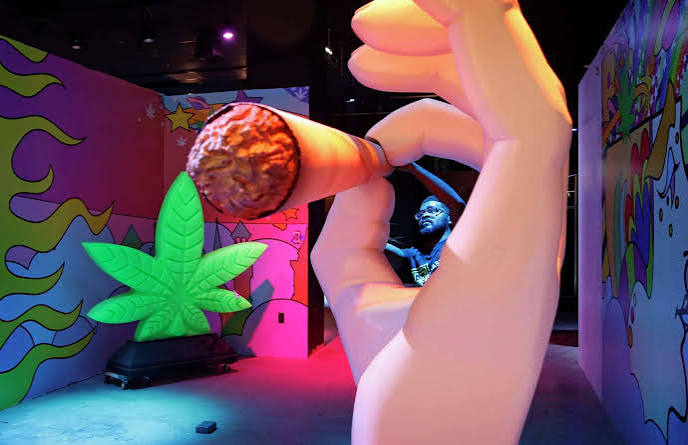
They rise like ancient trees, twisted and monumental, and every leaf has been shaped by hand. The giant gnarled plant sculptures are the first thing many visitors remember, and the last thing they stop photographing.
Walking beneath the plants
Most people picture a cannabis plant as something small and familiar. The museum turns that idea upside down. Here the plants are giant, gnarled and sculptural, reaching overhead like old trees in a quiet forest. You do not simply look at them. You walk beneath them, circle around them and tilt your head back to follow the branches upward.
That change of scale is the point. When something ordinary becomes monumental, you notice details you would otherwise miss: the curve of a stem, the texture of bark, the way each leaf catches the light. The sculptures ask for a slower kind of looking, and the reward for patience is real.
Made by contemporary artists
Each installation is crafted by talented contemporary artists, and the work shows. The sculptures are detailed enough to reward a slow second look, because every leaf is treated as a sculptural detail rather than background decoration. Artists have thought about proportion, balance and the feeling of age, giving the plants a gnarled, weathered quality that suggests decades of growth.
The Art Director and Installation Specialist at the museum has spent years designing pieces like these, from the first sketch to the final installed work. That means the process is carefully planned. Ideas begin as drawings, move into models and materials, and eventually become structures strong enough to stand in a busy public space.
What to look for
- Texture. Notice how surfaces vary from rough and bark-like to smooth and leafy.
- Shape. The twisting, gnarled forms give each plant its own personality.
- Light. Shadows change as you move, so walk around each piece instead of viewing it from one spot.
- Scale. Stand close, then step back and compare how the sculpture feels in each position.
Towering, gnarled cannabis plants crafted by contemporary artists, each one detailed enough to reward a slow second look.
Why sculpture suits this subject
Cannabis has a long cultural history, and it is easy to reduce that history to a few familiar images. Sculpture resists that. A large, handmade object demands attention and invites interpretation. It can be funny, impressive and thoughtful at the same moment. Visitors with different backgrounds will respond to the same sculpture in different ways, and that variety of reactions is part of what the museum hopes to create.
The scale also gives the plant dignity. For thousands of years people have grown it for fiber, food, medicine and ritual, and these sculptures remind visitors that the plant is older and more complex than any single debate about it.
Photographing the installations
These pieces are made for photographs, and a few simple habits make a big difference. Start with a wide shot that shows the full height of the sculpture and the people beneath it. Then move closer and capture texture, such as the surface of a trunk or the shape of a leaf. If you are with friends, take a group photo and a funny one, since both end up being favorites.
- Turn off flash near the artwork and rely on the room’s lighting.
- Crouch low for dramatic upward angles.
- Be patient and take turns when the space is busy.
- Keep walkways clear so other guests can move through.
Looking after the art
Handcrafted work deserves care. Touch only what invites touch, follow any signs, and keep bags and cameras from brushing against the sculptures. If you are unsure how to interact with a piece, a team member will gladly explain. Respect keeps the installations in good condition and means the next group of visitors gets the same experience you did.
Pairing the sculptures with the rest of the museum
The plant sculptures are one of four ways to explore the museum, alongside the interactive exhibits, the smoke lounge replica and the oversized dispensary-themed photo spots. Many visitors find that they enjoy the sculptures most when they return to them after seeing the other rooms. Armed with some history from the interactive displays and a pause in the lounge, the plants feel richer the second time around.
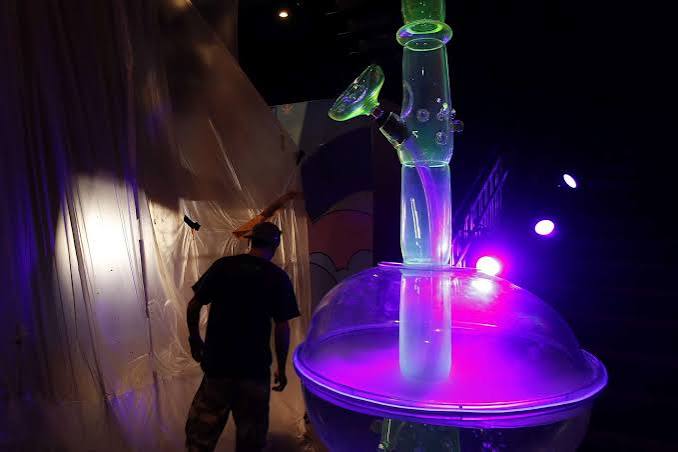
The museum also sits beside its most famous centerpiece, the world’s largest bong, which draws visitors from around the globe. A common route is to begin with the sculptures, visit the centerpiece for the photograph everyone wants, and then explore at leisure.
Practical notes
The museum is an adults-only space for guests aged 21 and over, and a valid government-issued photo ID is required for entry. Wear comfortable shoes, bring a charged phone, and allow a couple of hours to see every room. If you need step-free routes, seating or other support, tell the team before your visit and they will help make the experience comfortable. Please follow all local laws and enjoy responsibly.
Why a second visit changes everything
Large sculptures reward repetition. On a first pass, most people react to the size and the spectacle. On a second pass, they begin to see the choices the artists made: where a branch bends, how a leaf overlaps another, how the surface changes from one side of a trunk to the other. Many guests tell us they notice something new each time they return to the same piece.
If you only have one visit, build in a deliberate pause. Sit for a few minutes in a quiet corner, look at one sculpture without your phone, and let the details come to you. Then take your photographs. The pictures tend to be better when you already understand what you are looking at, and the memory lasts longer too.
Families of friends often turn this into a small game. Each person chooses a favorite detail, and everyone else tries to find it. It is an easy, funny way to slow down and appreciate the craft that went into every installation in the museum.
Sculpture viewing tips
- Walk around each piece to see how the light changes.
- Look closely at leaves, stems and surface texture.
- Take one wide photo and one detail photo.
- Touch only where invited and follow posted signs.